
Designing customer-centred systems that help people succeed.

I work with technology companies that want their customers to succeed. I help them understand where the customer experience breaks down and design the systems that improve adoption, engagement, retention, and customer success.

35,000+ learners supported across 100+ countries · Customer Success Leader · Speaker · Voice of Customer Strategist

Tabitha Kavyu seated on a cream sofa in a wine-red top, smiling
About

I'm Tabitha.

I design customer-centred systems that help people succeed.

I was most recently Head of Learner Success at AltSchool Africa, leading the Community and Customer Support teams. Over five years there I worked across Customer Success, Community, Customer Experience and Learner Success, supporting more than 35,000 learners in over 100 countries while helping the organisation build better customer journeys. Alongside that I held a contract role with Google as Crowdsource Community Coordinator, driving adoption and contributions in the app and launching the Crowdsource learning programme across 30+ universities in six East African countries, work that drove more than 2 million contributions.

What I carry from one role to the next is a capability rather than a department. I can work out how people experience an organisation, find where that experience breaks, and build the systems that help them succeed inside it. The job titles have changed. That has not.

I am at my most useful where something is being built or fixed rather than maintained, in companies growing fast enough that the systems have not caught up with the customers yet.

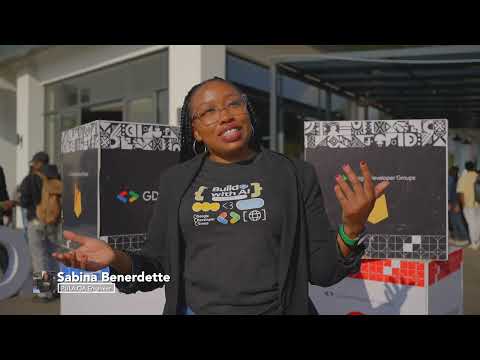
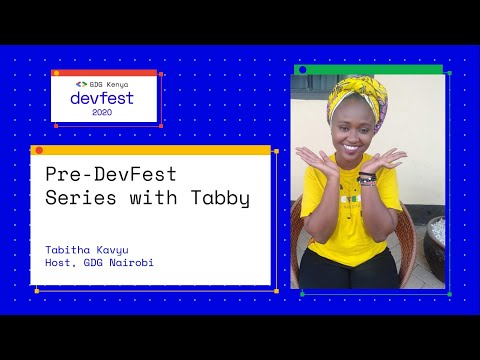
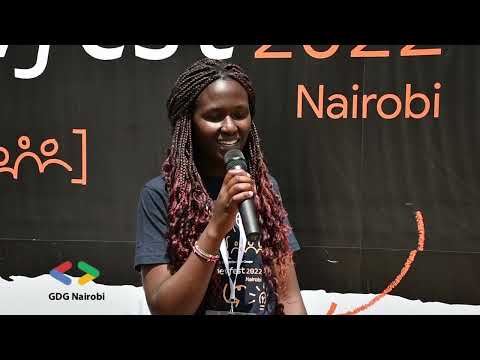
Alongside all of it I have stayed active in the Kenyan tech community, volunteering as an organiser with GDG Nairobi since 2020. That work is running events for the developer ecosystem: planning them, hosting them, and making sure the people who show up leave with something. It is where a lot of my instincts about experience were formed, and I have no intention of stopping.

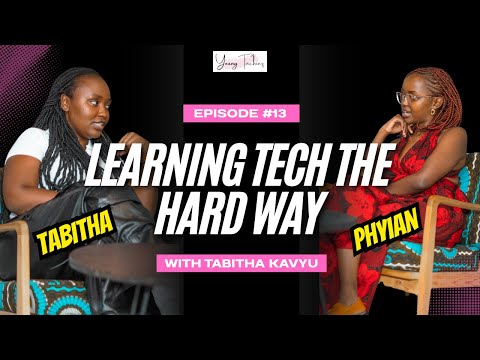
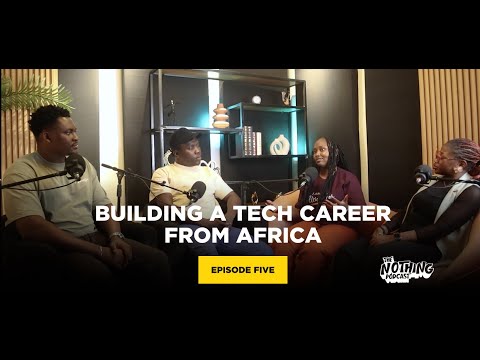
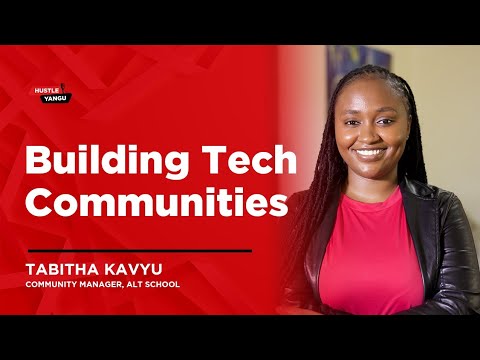
Outside work I enjoy writing, mentoring and speaking about leadership, customer experience and purposeful work.

Tabitha Kavyu standing in a wine-red top
Focus Areas

What I am known for

Customer Success

Designing customer success systems that help customers adopt, engage with, and succeed with products.

Customer Experience

Identifying where the customer experience breaks down and improving the systems, processes, and touchpoints that shape it.

Product Adoption & Community

Helping organisations build adoption and advocacy through community, education and meaningful customer engagement.

Voice of Customer

Bringing together customer feedback from different touchpoints, identifying recurring patterns, and turning those insights into decisions teams can act on.

Community-Led Growth

Building communities that contribute to activation, retention, referrals and advocacy, not just engagement.

Featured Transformations

My work has taken me across community, customer success, customer experience, retention and Voice of Customer. These are the three pieces of work that best show how I think: understand the people an organisation serves, find where the experience breaks down, and design the system that makes success more likely.

Transformation One

From Reactive Support to Learner Success

Reimagining Customer Support as a strategic source of learner insight

Support was resolving issues well, but the conversations happening there were telling us something bigger. Learners were repeatedly saying where they got stuck and what confused them. I rebuilt the function so it could resolve problems and help the organisation understand why those problems kept happening.

21% reduction in response time 35,000+ learners 11 cohorts, 100 countries

Context

When I became Head of Learner Success at AltSchool Africa, Customer Support was performing an essential operational function: responding to learner questions and resolving issues as they arose.

As the organisation scaled, I saw an opportunity to make better use of the conversations already happening in Support. Learners were repeatedly telling us where they were getting stuck, what was confusing them, and where our processes were creating unnecessary friction.

The challenge was not simply responding faster. It was creating a support operation that could resolve learner problems well while also helping the organisation understand why those problems were happening.

Approach

I started by strengthening the way the Support function operated: documenting standard operating procedures, giving the team clearer context on the learner journey, and creating structured escalation pathways with Programme Managers and Academic teams.

I also asked the team to look beyond individual tickets. Recurring questions, repeated points of confusion, and common learner blockers could tell us something about the wider experience. I documented those patterns and surfaced them to the teams that could act on them.

Outcome

A more consistent and proactive support operation, with clearer escalation paths and better visibility into recurring learner challenges. Average human response time improved from 45 minutes 39 seconds to 36 minutes 03 seconds within one month, roughly 21%. More importantly, learner insights began informing operational decisions beyond the Support team itself.

Proof

  • Reduced average human response time by approximately 21%
  • Supported more than 35,000 learners across 11 cohorts from about 100 countries
  • Established documented support processes adopted across the Learner Success function
  • Learner feedback and recurring support themes informed operational improvements and cross-functional conversations

I don't see Customer Support as a function that simply closes tickets. I see it as one of the richest places to understand how customers experience an organisation, and one of the places where small operational changes create a better experience at scale.


Transformation Two

Designing Customer-Centred Retention at Scale

Connecting business goals, learner behaviour and proactive intervention

Retention was the problem I kept returning to. It started with payment reminders, became a conversation about what was actually blocking learners, and ended as an automated system that used LMS activity data to reach people before they disappeared.

Activation model adopted across cohorts Automated with Engineering

Context

One of the challenges I was trying to solve at AltSchool Africa was retention. As I thought more about the role Community could play, I became increasingly intentional about understanding the business and finding ways for Community to contribute to business goals while still creating value for learners.

Revenue was one of the metrics that mattered, which led me to think about tuition payments differently. I introduced payment reminders as one way to contribute, but I also knew what happened when a learner fell behind: some would eventually ask to defer or wait for another intake and start again.

So the payment reminder became more than a payment reminder. I used the communication to encourage learners to stay on track with their learning as well. Some appreciated the nudge. Others explained they were struggling financially or had become too busy to keep up. Those conversations reinforced something important: a learner not paying or progressing was not always a sign of unwillingness. Sometimes there was a blocker underneath it that we could only understand once we reached out.

Approach

I started looking beyond Community activity as a signal of learner progress. We had an LMS, which meant there was data showing which learners were engaging with their materials and which were not.

I reached out to the Data team to understand what was available and what we could track, then used that data to identify learners who had stopped engaging and reached out to encourage them back. At first I did this manually. The responses helped us separate learners who were simply busy and needed a nudge from those facing bigger blockers.

The manual process was useful for testing the approach, but it was not going to scale. I approached Engineering about automating the intervention, creating the learner segments and the messages for each group. Learners inactive for around two weeks received encouragement to get back on track; those inactive for longer received a more direct check-in focused on understanding what was getting in the way.

Outcome

The payment activation approach became repeatable across cohorts, and the LMS-based intervention created a more proactive response to inactivity. The important change was not sending more messages. It was moving from waiting for learners to tell us they were struggling to using available signals to start the conversation earlier.

Proof

  • Designed a payment activation approach adopted across subsequent cohorts
  • Supported learner success initiatives across 35,000+ learners and 11 cohorts
  • Used LMS activity data to identify learners no longer engaging with their materials
  • Worked with Engineering to automate segmented learner interventions based on inactivity

I try to connect the work my team owns to what the organisation is trying to achieve. I also look beyond the most visible metric for signals that tell me whether the people we serve are actually progressing. When a manual intervention works, I look for the system that makes it repeatable.

Transformation Three

Turning Customer Feedback into Organisational Strategy

Building a Voice of Customer system that turns listening into action

Feedback existed across surveys, support conversations, community discussions, check-ins and student leaders, but individual pieces stayed inside the channel that received them. I built the process that found the patterns and made sure they reached the people who could act.

15+ improvements influenced Insight across seven teams

Context

Customer feedback existed across surveys, Support conversations, community discussions, learner check-ins, student leaders and programme reviews.

The information was valuable, but it was easy for individual pieces of feedback to remain within the team or channel where they were received. I wanted to make sure recurring learner problems were not simply recorded. They needed to reach the people who could actually do something about them.

Approach

I brought together feedback from the different learner touchpoints and looked for recurring patterns rather than treating every response as an isolated issue. That meant analysing semester surveys and check-ins alongside Support conversations, community discussions and other learner interactions. I documented the themes, highlighted what needed attention, and shared the insights with the relevant stakeholders.

The important part for me was closing the loop. I didn't want feedback to end with a report. I followed up with the teams involved and advocated for the learner perspective in conversations with Product, Learning, Operations, Engineering, Finance and Leadership.

Outcome

Learner insight became part of cross-functional conversations around product, curriculum, operations, communication and support. The process influenced more than 15 improvements. The value was not in the number of surveys completed; it was in what the organisation chose to do with what learners told us.

Proof

  • Built a structured Voice of Customer process spanning multiple learner touchpoints
  • Influenced 15+ product, curriculum and operational improvements
  • Connected learner insight across Community, Product, Learning, Operations, Engineering, Finance and Leadership
  • Created reporting and follow-up practices that kept learner issues visible beyond the team that first received the feedback

I don't think listening is measured by how much feedback an organisation collects. It is measured by what the organisation is willing to change because of what it heard.

How I Think

Better systems create better experiences.

Many problems organisations describe as people problems are actually system problems that people experience.

Early on at AltSchool Africa, when a learner went quiet, I went after that learner. Sent the message, made the call, brought them back. Then a few weeks later it would happen again with somebody else, at roughly the same point in the programme. Working through enough of those is what showed me the more useful question was not how to reach each person faster, but where in the journey people were disappearing in the first place. It was nearly always the same place.

So now when something goes wrong I do not ask who dropped it. I ask what made it so easy to drop. Support tickets do not pile up because a team stopped caring, they pile up because nobody ever built a path for the hard ones. People rarely stop paying for a service because they stopped wanting what they signed up for. Something in the experience made stopping feel reasonable, and there was nothing built to catch them.

Whatever room I am in, I end up being the one asking about the person who is not in it: the learner, the attendee, the community member, the customer. And the question I keep coming back to is the same one: what would make success easier for the people we serve?

Speaking

Same voice. Bigger rooms.

I started on university campuses talking about imposter syndrome and Google Crowdsource. Now I speak to community professionals, learners and leaders across Africa. I've had more than 45 speaking engagements since I started, in six countries.

I speak about customer success, community strategy, customer experience, Voice of Customer, leadership, influence without authority, and starting a career in tech, drawing from the work and experiences behind these ideas.

Brands that trusted my voice at their events

CMX Connect Ibadan
CMX Connect Lagos
Community Managers Festival Africa
dotNexxt
Alluvium
Zindua School
Open Source Festival
AltSchool Africa

Most recently: Designing Communities that Scale, on turning engagement into opportunity, access and ecosystem growth, at the CMX Nigeria Summit.

Speaker Kit

Inviting me to speak? Everything you need is here.

Tabitha Kavyu headshot
Official headshot · more in the press kit

Tabitha Kavyu designs customer-centred systems that help people succeed. As Head of Learner Success at AltSchool Africa she led the Community and Customer Support functions, supporting more than 35,000 learners across 11 cohorts in over 100 countries. She also held a contract role with Google coordinating Crowdsource communities across six East African countries, work that drove more than 2 million contributions. She speaks on customer success, community strategy, and the confidence it takes to own the room you earned.

Speaker bio
Writing

Where my thinking lives

I write about customer success, community, work, leadership, and the lessons I pick up along the way.

On Camera

Interviews, stages and campaigns

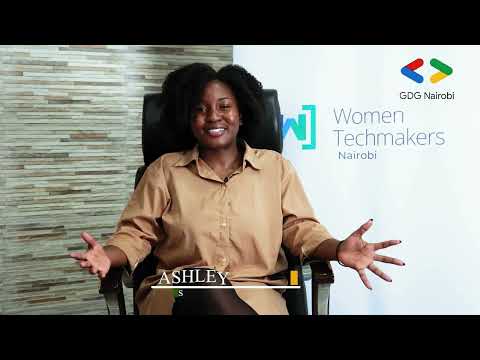
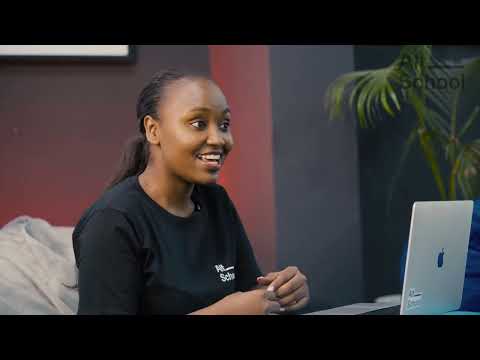
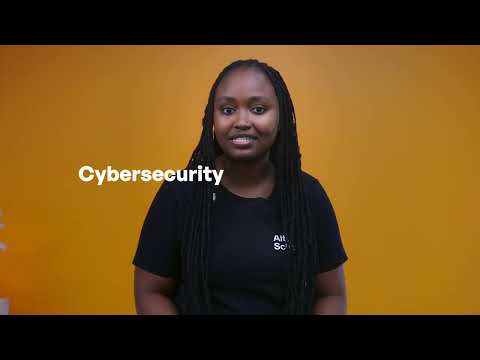
I am comfortable on camera and in front of a room: being interviewed, MCing, and fronting brand campaigns.

Testimonials

The work is measured by the people it changes.

From the people I worked with and the learners I served at AltSchool Africa, shared with their permission.

"There are people who do their jobs, and there are people who quietly become part of the soul of a company. You have been the latter."

"A two-time Employee of the Year not because you chased recognition, but because excellence, care, consistency and ownership naturally followed you into every room you entered. Beyond the titles, what I will always deeply respect is how fiercely you have always fought for our learners, especially in rooms they could never enter themselves. You carried their frustrations, their hopes, their fears and their expectations with a level of responsibility that very few people genuinely do."

Nifemi Akinwamide · my lead, AltSchool Africa

"Tabby is the heartbeat of our community initiatives."

"Her leadership has been instrumental in building a vibrant community that is inclusive, supportive and empowering. She has a unique ability to listen, understand and amplify the voices of others, creating a sense of belonging and ownership among community members. Her creativity, problem-solving and collaborative approach have been invaluable in driving community engagement and growth."

Emmanuel Ogunsola · Head of Product and Engineering, AltSchool Africa

"Your encouragement and suiting words is the reason I didn't drop out in the second semester."

"You have been nothing but awesome, the only person that responds on time. I wonder how you do that. You're rare."

Humphrey Kingsley

"You have continuously supported my progress."

"You shared information on helpful tools and opportunities which helped me with building a few projects. I started as a beginner but so far I've cleared more than 4 beginner certifications, including the globally recognised standard qualification for my field."

Jeffrey Obi

"You try so much to carry everyone along."

"I had just become president of SOE and there was a conflict between two students. It kept heating up. Eventually I involved you and you resolved everything after a few hours. I am now interning as a cloud security consultant at Amdari UK."

Shared anonymously

"Keep moving, we are rooting for you. I grabbed those words into me, and have been living with them since then."

"You always showed up for every lecture, supporting us, clapping, cheering us on. Your consistent encouragement kept us motivated to stay committed."

Deborah

"You inspire confidence in me."

"You helped by sharing your experiences and deliberating with us on how to proceed or approach issues. You gave clear clarifications to any issue we put on your table."

Taiwo Ajadi

"Motivational and inspiring."

"Your Monday motivation inspired me on one of those days I was feeling a bit down. Those mails each came in handy as a reminder that I will complete the journey at last. It helped me socialise with my peers and understand I wasn't alone."

Ojigbare Oyinemi

"Inspirational."

"Even without direct encouragement, your words and the way you interact with people are incredibly encouraging. The respect you earn and the inspiration you offer are simply amazing."

Olatunji Oluwashola

"You strive to make a positive difference by constantly seeking knowledge and supporting the people around you."

"I was in the middle of my journey and wanted to give up. AltSchool exposed me to a lot in the tech world that I never knew about."

Olaopa Sefeenat Oyewonuola

"A kind, patient and warm person."

"You encouraged me through all the meetings you organised. After my graduation, my quality of work improved greatly, not originally having a tech background."

Shared anonymously

"You're quite resourceful and invested in the growth of the students."

"Each time I open the AltSchool Slack channel, I look forward to seeing your posts, as there is always something encouraging, as well as tips on how we can be well grounded in skills beyond what we're studying."

Oluwatomiyosi
Work With Me

Ways to work together

SpeakingSessions and keynotes on customer success, community strategy, leadership, confidence and visibility.
ConsultingI help teams understand where the customer experience is breaking down and design practical systems to improve it.
WorkshopsPractical workshops on Voice of Customer, retention and customer-centred operations.
AdvisoryOngoing support for leaders building or strengthening customer success, community, or customer-centred operations.
Becoming

My career is only one expression of who I am.

My mission is to help people recognize their potential and create the environments where that potential can flourish. I do this by designing customer-centered systems, developing leaders, sharing practical wisdom, and using my voice to encourage others to pursue purpose, excellence, and faithful stewardship.

Five values sit underneath all of it.

Faith Encouragement Authenticity Impact Growth

I did not work this out alone. As a student I was a mentee in the KamiLimu programme, and someone there took my potential more seriously than I did at the time. That is a large part of why mentoring is not optional for me now.

I have spent five years giving people courage, visibility and a next step. The current chapter is learning to turn those same gifts inward.